
Effect of clearing de-fragmentation on fragmented trading
DOI:
https://doi.org/10.67301/jecs.v1.4Keywords:
Clearing, CCPs, market fragmentation, liquidityAbstract
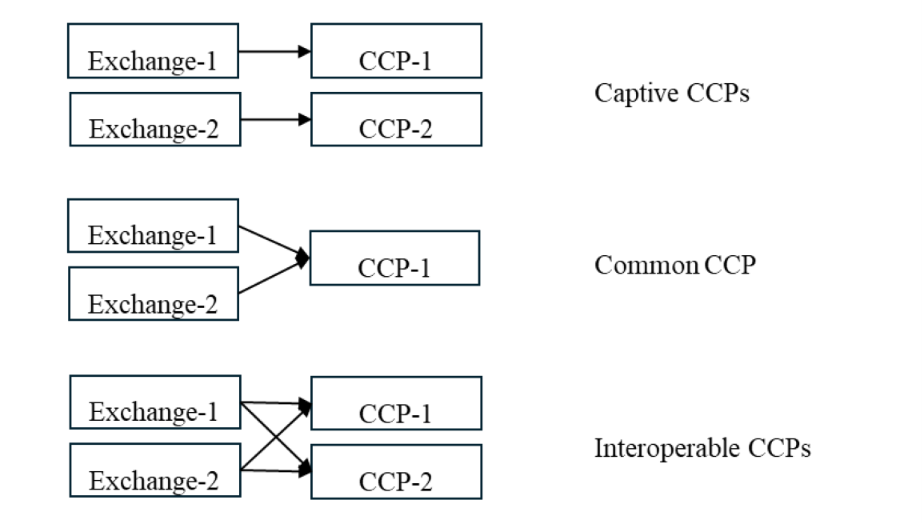
In many markets, trading is distributed across multiple exchanges or venues, resulting in fragmentation. Central counterparty (CCP) clearing may either reflect this fragmentation or be consolidated via a single CCP or through interoperability among multiple CCPs. This paper examines howthe choice of the clearing model affects trader behaviour under fragmented trading and shows that, when inter-exchange arbitrage costs are high, informed traders prefer to supply liquidity on the less liquid exchange. However, when these costs are lowered due to netting from de-fragmentation of clearing, they instead prefer to supply liquidity on the more liquid exchange. As a result, clearing de-fragmentation concentrates trading activity on a single exchange. This enhances price informativeness, narrows bid-ask spreads and improves welfare by reducing adverse selection for uninformed traders.
Downloads
Published
Issue
Section
License
Copyright (c) 2026 The Author

This work is licensed under a Creative Commons Attribution 4.0 International License.